
Reading Skradin history through the river
Skradin history begins long before the national park and its visitor boats. The town developed on ancient Scardona on the right bank of the Krka, with Liburnian and Roman roots. Strabo, Pliny and Ptolemy mention the ancient settlement. This setting gives the modern visit a wider frame: the river is part of the story of a town, as well as the landscape that draws people towards the waterfalls.
The visible town belongs to several different periods. Medieval Turina stands above a historic centre whose houses include buildings from the eighteenth and nineteenth centuries. Those layers should not be read as one surviving Roman townscape. Use the streets and hilltop setting to understand the sequence, then turn to the Skradin sights guide for a practical walk. The historical background and the route through town serve different purposes.
From Liburnian fortification to medieval Turina
Turina is a medieval fortress built on the remains of a prehistoric Liburnian fortification. Its construction is associated with the rule of Pavao I Šubić Bribirski from 1273 to 1312. The importance here is continuity of place across different periods, rather than a claim that the standing structure is all prehistoric. The fortress and the ancient settlement give separate reference points for understanding Skradin before its later streetscape.
Approach this part of the story as an outdoor reading of the town. Looking between the hill and the historic centre is enough to connect the medieval landmark with the settlement below; an interior visit is a separate decision. Keep the earlier Liburnian layer, the medieval fortress and the later stone houses distinct. That makes the chronology easier to follow without assigning an invented age to every wall along the way.
Discover Krka heritage
This guided park trip visits old mills and a hydroelectric power station.
Hand-picked tours, booked through Viator. Prices are indicative starting prices in euros (as of October 2026). Tap a tour for live availability and the current price in your currency.
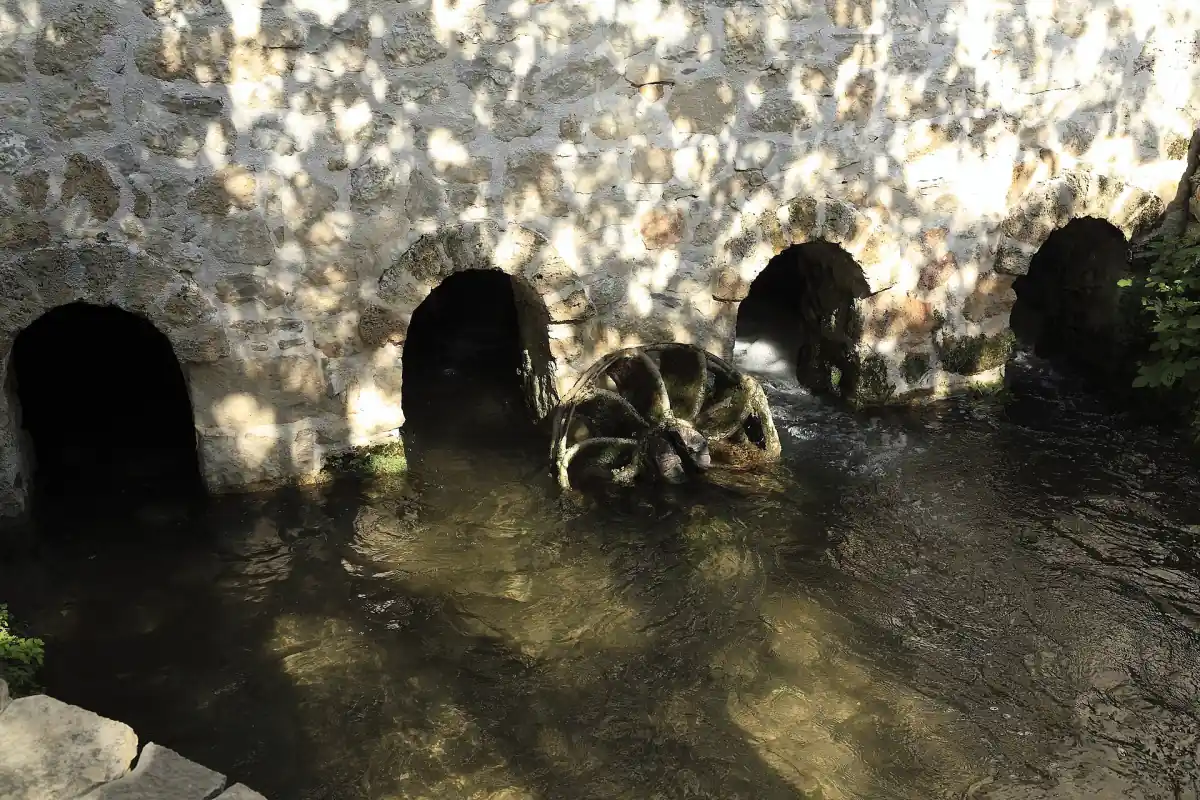
Watermills and hydropower on a guided park outing
Explore the Ethno Museum, old watermills and hydroelectric heritage during a park tour with return bus transport and a river cruise.
The old centre and its cathedral consecration
The protected historic centre contains narrow paved lanes, passages and vaults. Trg Male Gospe brings together the church, parish building and town hall. Houses from the eighteenth and nineteenth centuries form part of this setting, making the square useful for understanding how civic and religious buildings sit within the town. It is a place to look at the relationship between buildings, rather than a list of interiors to enter.
The Church of the Nativity of the Virgin Mary was consecrated as a cathedral on 16 April 1758. This is a specific event in the church’s history, not an opening date for present-day visitors. Keep time for the surrounding streets and exterior details instead of making an interior visit essential to the day. For a broader understanding of the protected river landscape, continue with the national park overview.
Watermills and the hydroelectric power station
At Skradinski buk, restored watermills and the remains of a hydroelectric power station from 1895 show a different use of the river. Alongside the waterfall landscape, these sites reveal water as a working resource. The marked educational circuit is 1,900 metres long and follows a prescribed direction. The mills and information panels give the walk a cultural thread as well as views of the water.
The guided park outing includes the Ethno Museum, old watermills and the hydroelectric power station, together with a Krka River cruise and return bus transport. Its historical focus belongs to the park. Treat it as a way to explore the river’s working heritage rather than as a guided walking tour of Skradin’s streets. For route and mobility considerations, see the walking tours page.
Elsewhere, Roški slap also has mills and a traditional fulling installation. These places help connect the waterfall system with everyday uses of moving water. A view of old machinery does not imply a scheduled demonstration, so plan the visit around the installations and the landscape themselves. The Roški slap guide explains how this upper-river site differs from the Skradinski buk circuit.
Visovac and the protected landscape
The Franciscan community on Visovac dates to 1445, while the cultural heritage account dates the construction of the monastery and church to 1576. These dates describe different parts of the island’s history. They should not become a single age for every building now visible. Archaeological finds, liturgical textiles and objects, and a library with incunabula form part of its heritage. An island visit uses a separate boat arrangement.
Krka became a national park on 24 January 1985. Its protected landscape includes travertine barriers, lake sections and a river valley cut into limestone. The history of using the water now sits within rules for protecting that sensitive system. Remain on marked paths and avoid damaging travertine or plants. Swimming is prohibited at Skradinski buk. The Visovac guide covers the island’s access and religious visiting rules without folding it into the standard park boat transfer.
Questions about your visit
Was Skradin known as Scardona?
Modern Skradin developed on ancient Scardona, with Liburnian and Roman history. Ancient writers including Strabo, Pliny and Ptolemy mention the settlement.
What does the year 1895 refer to?
It refers to the hydroelectric power station whose remains form part of the cultural landscape at Skradinski buk, alongside restored watermills.
Does 1445 date all the Visovac buildings?
It dates the Franciscan settlement. The construction of the monastery and church is dated separately to 1576 in the cultural heritage account.